-
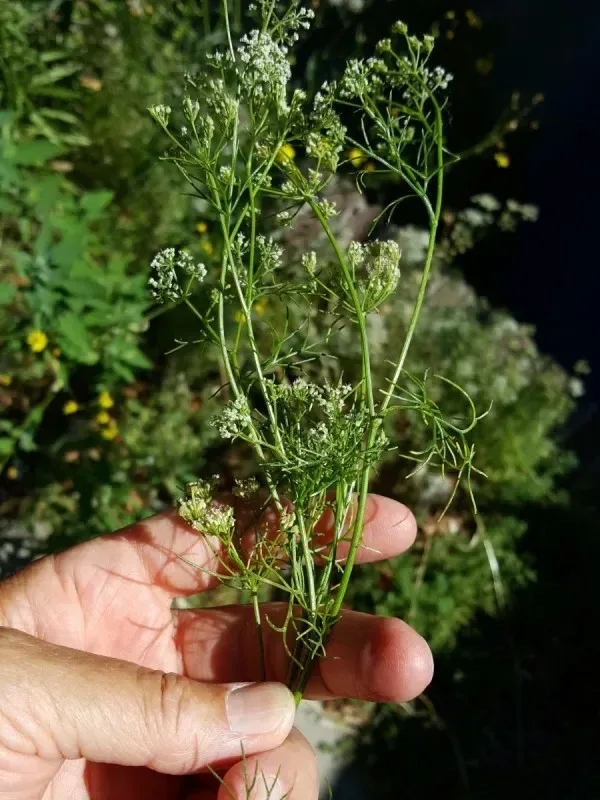
Hanneke Waller
-
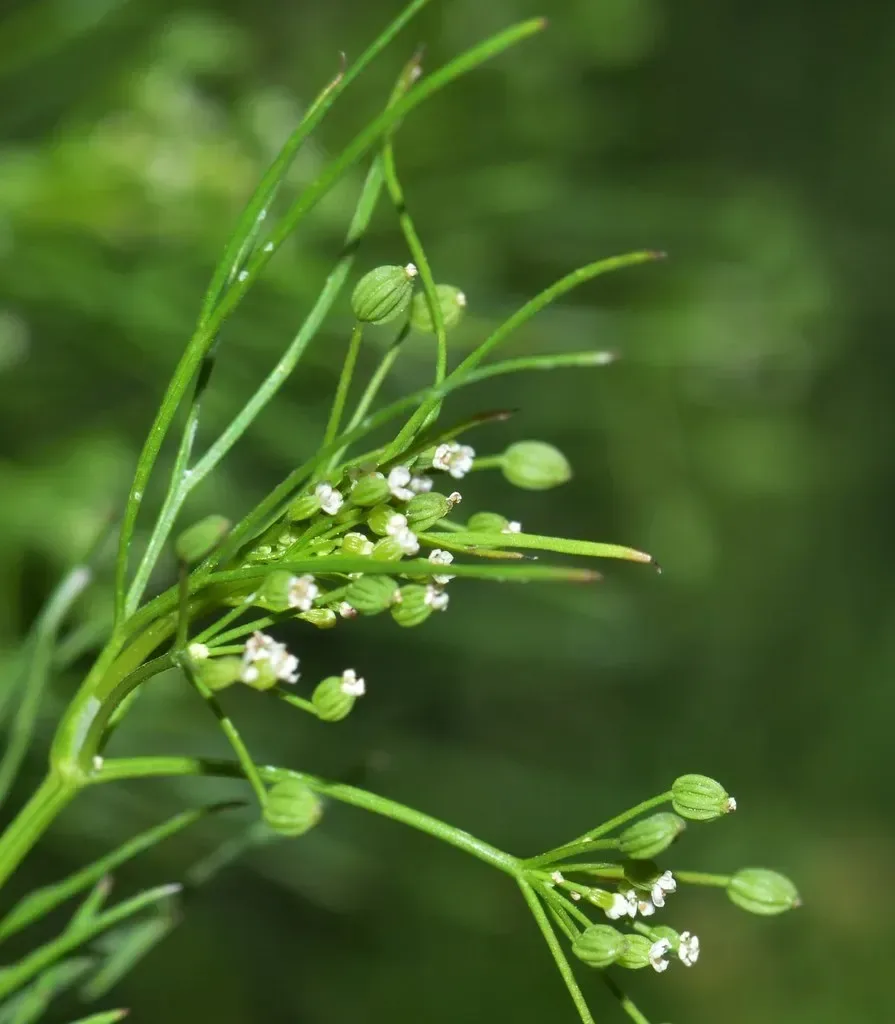
plantuse_org
Habit
Herb
Origin
Native
Flowering
Summer, Monsoon, Winter
Edible
Yes
Sourcing
Available
Sun
Full sun
Drainage
Must not sit wet
Sow
October–November
Started from
Seed
Its umbrella-shaped flower clusters can attract bees, hoverflies, and other small insects.
- Sow directly in a sunny pot or bed around October-November in Ahmedabad.
- Scatter or sow shallowly, about 0.5-1cm deep, and thin seedlings to roughly 15-20cm apart.
- Water lightly but regularly while establishing, reducing watering as plants mature.
- Harvest seed heads once they dry and turn brown, then dry them further before storing.
A familiar spice in Gujarati and wider Indian cooking, especially in snacks and breads.
- Seeds are used as a spice in breads, snacks, curries, pickles, and digestive spice mixes.
- Recipes, courtesy of Treewalks:
- For cold, cough, and congestion (adults and children above 5): bring 1 cup of water to the boil in a pan.
- Add 3-4 Ajwain leaves along with either 4-5 Tulsi leaves, one lemongrass leaf, or 1-2 Ardusi leaves.
- Add a pinch each of black pepper, cinnamon, and ginger powder (fresh ginger works too).
- Boil for 10 minutes until reduced to half, then strain.
- Add a little rock salt, 1/4 teaspoon of desi ghee, and jaggery or honey to taste.
- Drink warm, once or twice daily.
- For babies: apply coconut oil to an Ajwain leaf, warm it gently over a diya (oil lamp), and once it's still slightly warm, place it on the baby's chest and back.
- For steam inhalation: add crushed Ajwain leaves to a steam inhaler for strong relief from a cold and blocked nose or sinuses.
- For headache: gently rub crushed Ajwain leaves on the forehead.
- For digestion: simply chew fresh Ajwain leaves, on their own or with a little honey.
- For insect bites: crush the leaves and apply directly to reduce pain and swelling.
- For daily use: Ajwain leaves can be added to kadha (herbal decoction), soups, rasam, green tea, or other herbal drinks.
- (These are traditional home remedies, not a substitute for medical advice.)
These uses are documented for information only and are not medical advice. Always verify the species and the plant part before use.
Cultivated widely in India, including western and northwestern regions.