-
Arijeet Rege
-
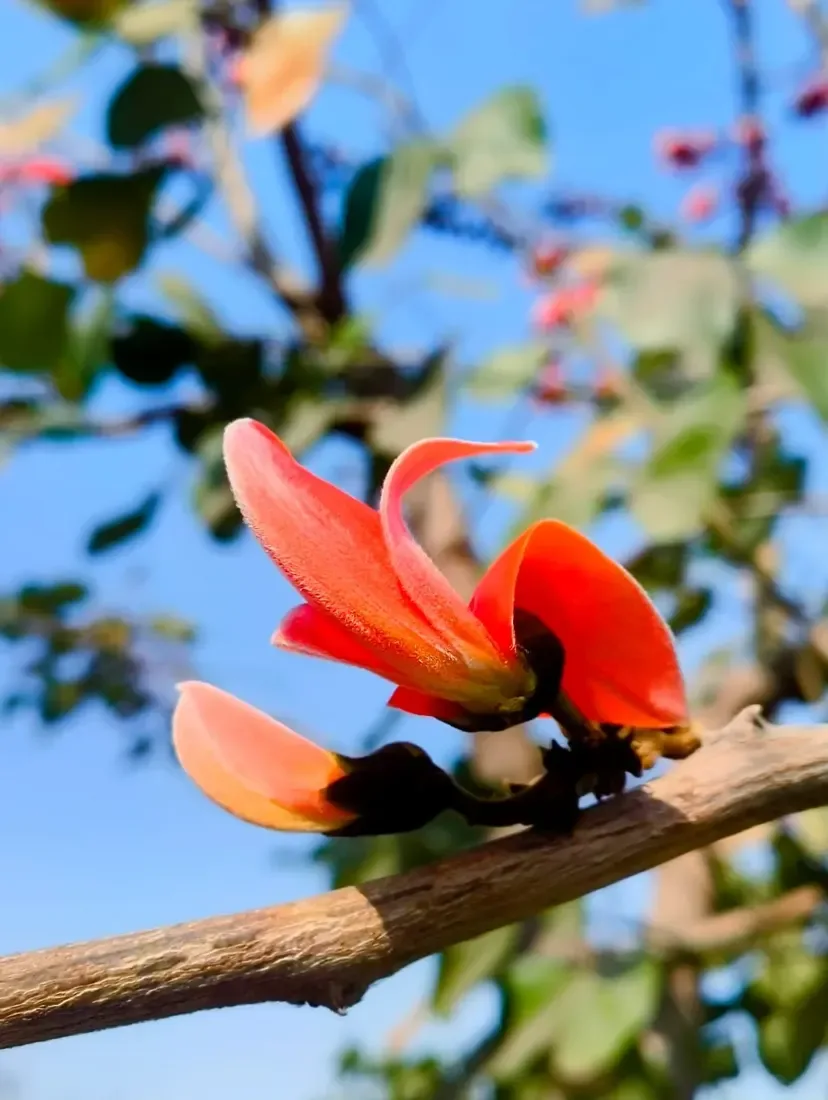
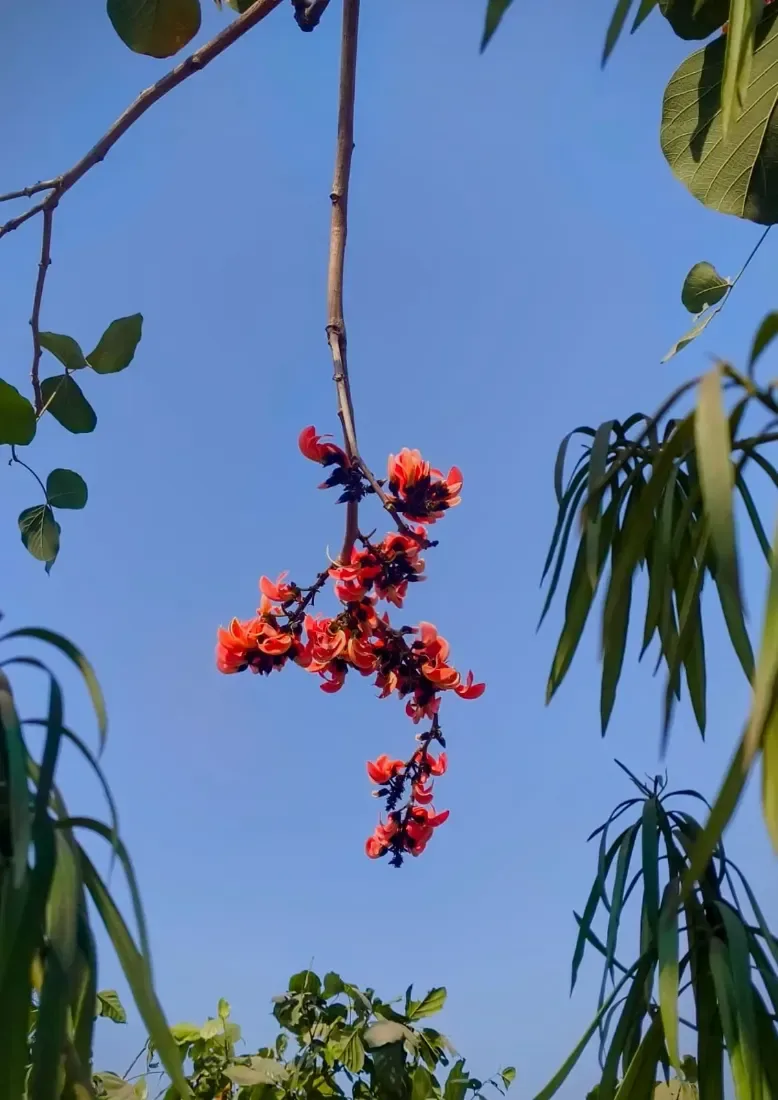
કેસૂડો
Butea monosperma
bastard teak ढाक
Native
Commonly known as battle of Plassey tree, Bengal kino, flame of the forest, parrot tree.
A keystone nectar source in the dry season for sunbirds, Oriental white-eyes, and insects; a butterfly host plant; and a base for an entire lac-insect food web.
Its flowering coincides with the leanest, driest part of the year, when almost nothing else is blooming, making it a critical late-season food source for sunbirds, white-eyes, and various insects that go on to pollinate other forest plants. It also hosts several butterfly species as caterpillar food (Common Emigrant, Ceruleans, Red Pierrot) and supports a lac-insect community, plus predatory wasps and beetles that come with it. Combined with nitrogen-fixing roots, this modest-looking tree quietly does more ecological work than its timber value suggests.
- Its flowers yield a yellow to deep orange-red dye called butein, traditionally used to colour silk and cotton and to mark foreheads in Hindu rituals.
- The gum, known as Bengal kino, is used as an astringent and in tanning and dyeing.
- Leaves double as livestock fodder and are stitched together into traditional plates.
- Seeds yield an oil with anthelmintic (deworming) uses, and the tree's light wood goes into agricultural tools and boxes.
- It's also used to stabilise field bunds and as green manure.
These uses are documented for information only and are not medical advice. Always verify the species and the plant part before use.
Found across India except the most arid regions, often in open grasslands and the Terai. In Gujarat, it's especially abundant around Pavagadh (Panchmahal district), Shamlaji, and Dang.