-
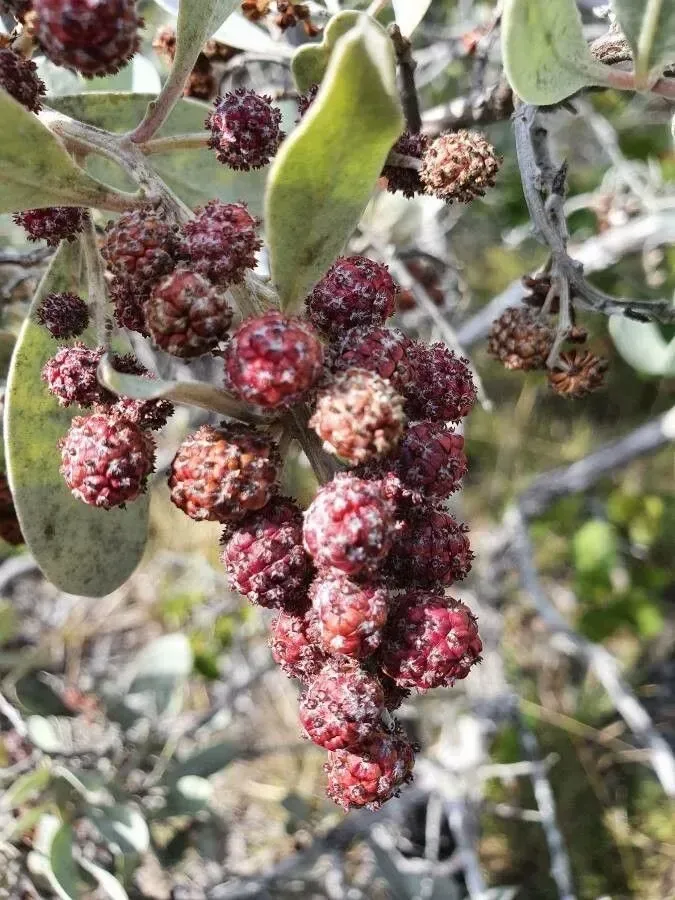
Christof Weindl
-
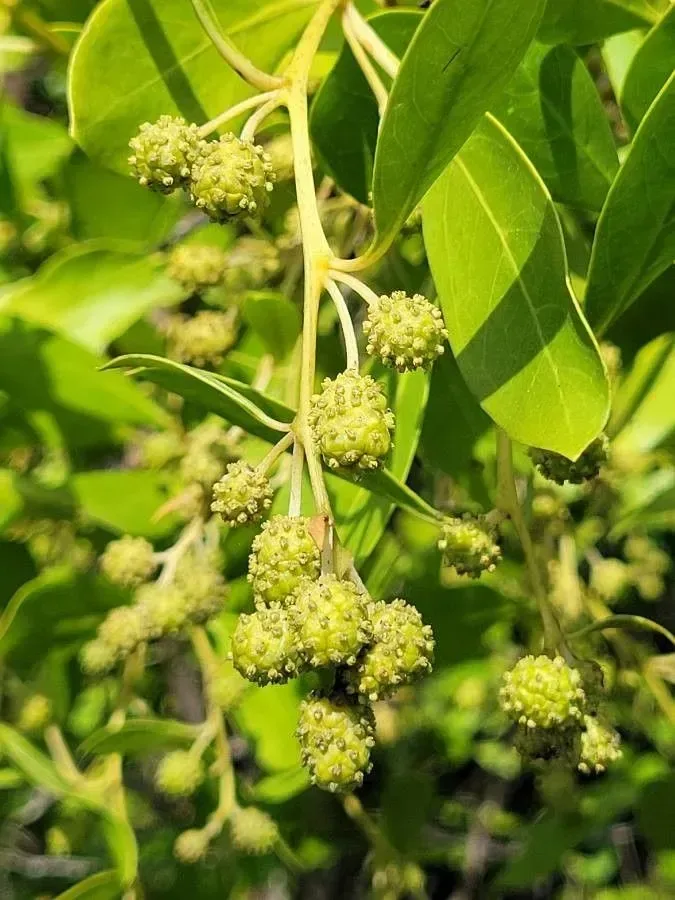
Matthew Horrigan
-
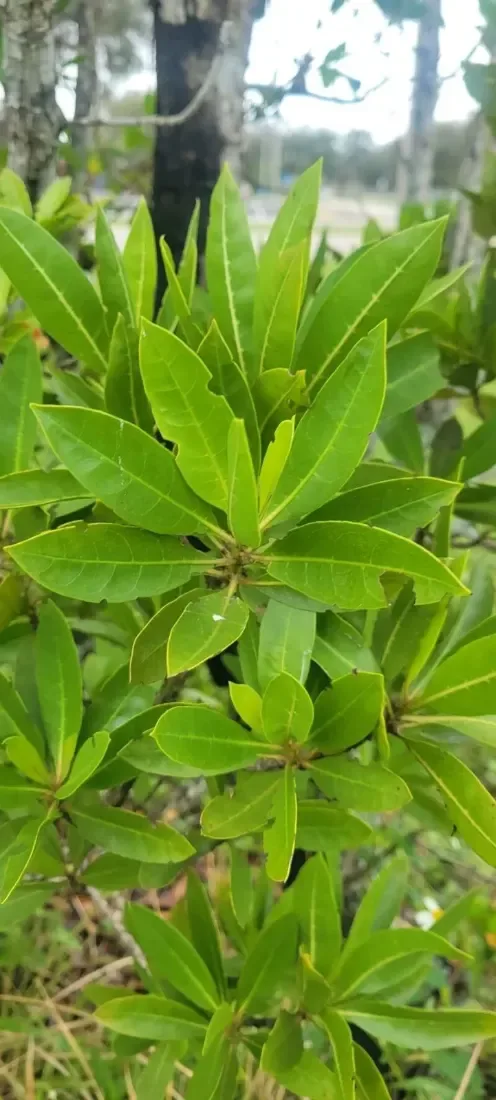
Michael Dueitt Jr
-
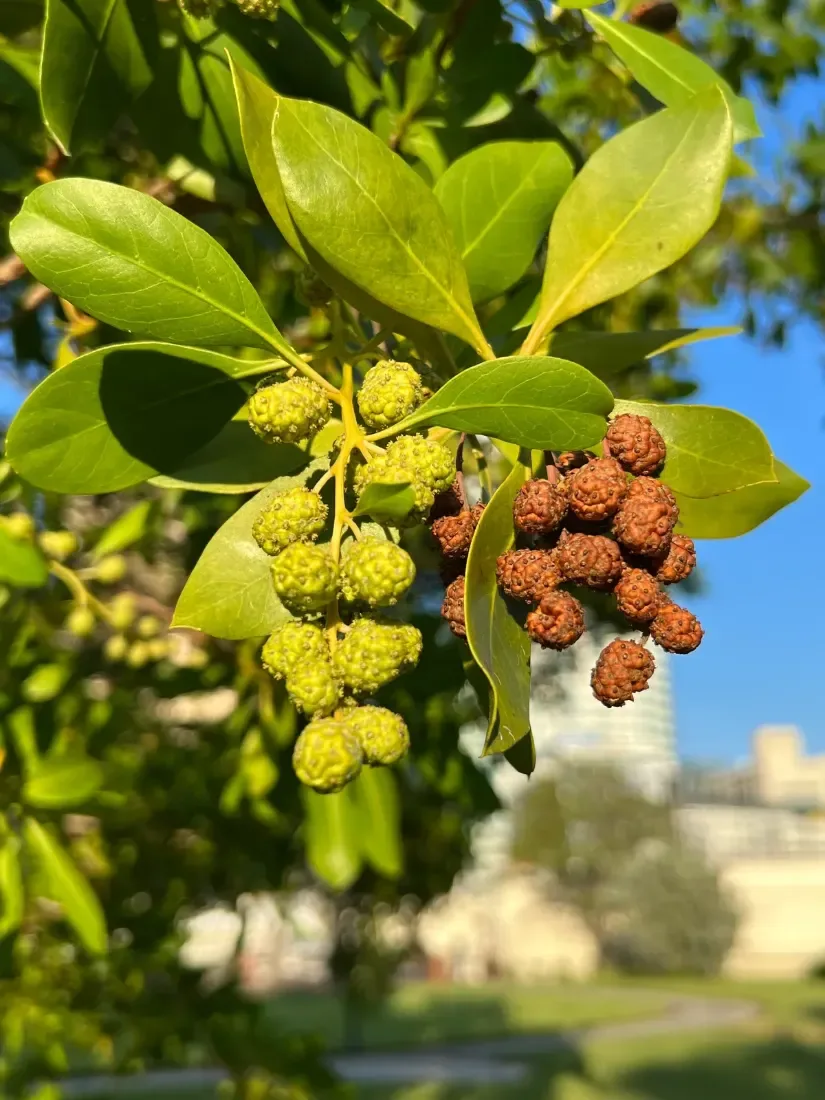
Buttonwood
Conocarpus erectus
Exotic
Commonly known as Green Buttonwood, Cono Carpus.
Habit
Tree, Shrub
Origin
Exotic
Flowering
Summer, Monsoon, Winter
Edible
No
Sun
Full sun
Water
Drought tolerant once established
Soil
Sandy
Soil pH
5–7.5
No specific wildlife-relationship data recorded for this species.
No cultural-significance data recorded for this species.
- Bark contains tannins with astringent medicinal properties, and leaves and bark are also used for dyeing.
- The tree takes well to trimming and is often grown as a hedge or screen, propagated easily from large cuttings, and has become a popular land-reclamation species in places like the UAE, used specifically to green and desalinate desert land.
- Its wood is exceptionally heavy, hard, and durable even in soil contact, prized for fence posts, boat building, and furniture, and makes a slow-burning fuel and excellent charcoal.
These uses are documented for information only and are not medical advice. Always verify the species and the plant part before use.
Coastal tropical America (Florida through the Caribbean and Central America to Brazil and Peru) and West Africa from Senegal to Angola, typically in salt and brackish mud flats on the landward side of mangrove forests.