-
Pieter Bruijsten
-
mclaude14
ઇંગોરિયો
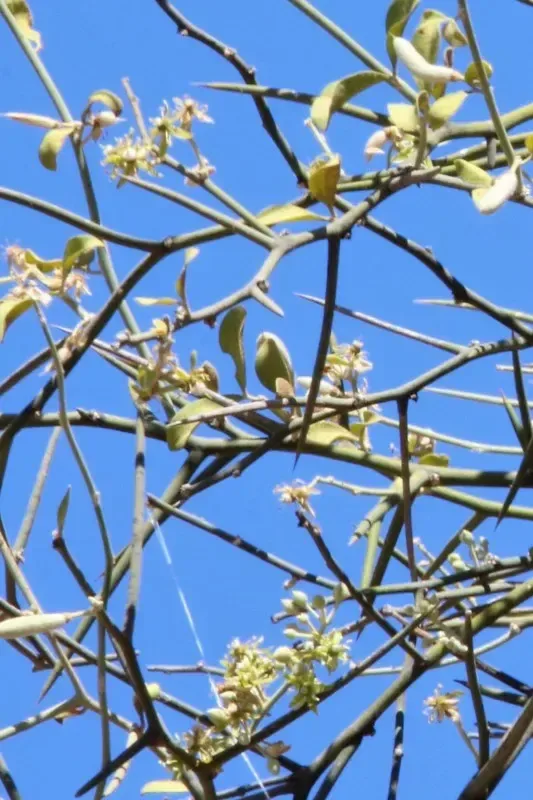
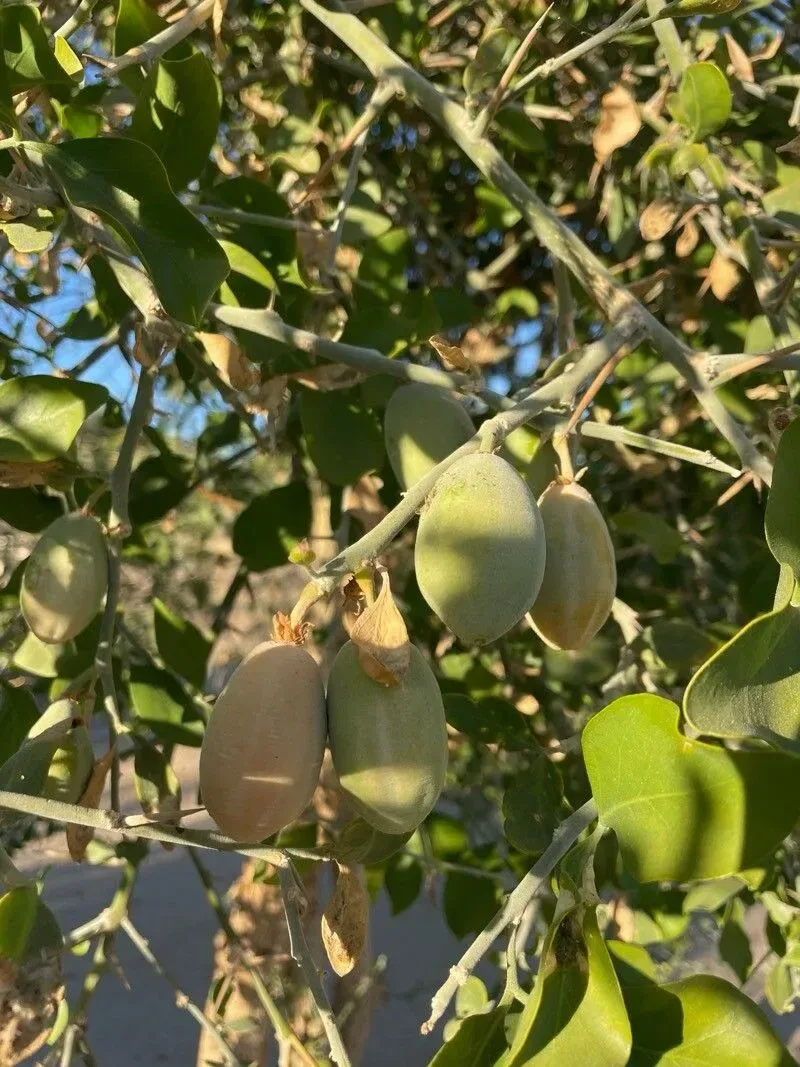
Balanites roxburghii
Desert date हिंगन
Native
Commonly known as Ingoriyo.
No specific wildlife-relationship data recorded for this species.
- The hard seed coat needs mechanical scarification or cracking before sowing.
- Soak scarified seed in water for 24-48 hours, then sow in a sandy, well-draining medium; germination follows in 2-4 weeks under warm conditions (20-25°C).
- Fresh seed germinates best.
- Direct sowing in the field during monsoon is a common approach, and root suckers that develop naturally can also be transplanted.
- Planting: set bare-root trees out in late autumn to early spring during dormancy; container-grown trees can go in year-round but establish best in autumn.
- Give the mature canopy enough room, crowding leads to poor form and disease.
- Plant at the same depth as the nursery container, don't bury the root flare, and stake only on exposed, windy sites, removing the stake after 1-2 years so the trunk strengthens naturally.
Ayurveda considers it pungent, bitter, and hot, used against worms, wind-related complaints, poison, leprosy, sores, and phlegm. Its oil treats sores and leprosy, and it's traditionally used for breast diseases, eye discharge, colic, earache, ringworm, and cough. Fruit juice is even used to remove stains from cloth and to wash silk and yarn.
- Seeds yield a substantial 36-43% oil with antibacterial and antifungal properties, used for skin diseases, burns, and lamps and soap-making.
- The oil-free seed kernel is protein-rich (54.6%) and, notably, a good source of diosgenin, the plant compound historically important as a starting material for producing oral contraceptives.
- Fruit treats liver and spleen disease; roots ease abdominal pain and work as a purgative; and the fruit kernel doubles as a mild laxative, an antidote to arrow poison, and a dewormer.
These uses are documented for information only and are not medical advice. Always verify the species and the plant part before use.
Peninsular India, from western Rajasthan and south-east Punjab to the arid regions of West Bengal and Sikkim, plus Myanmar. In Gujarat, found in savannah grassland regions like Modasa, Gir, and Bardo, and in riverine areas, foothills, and scrub jungle.