-
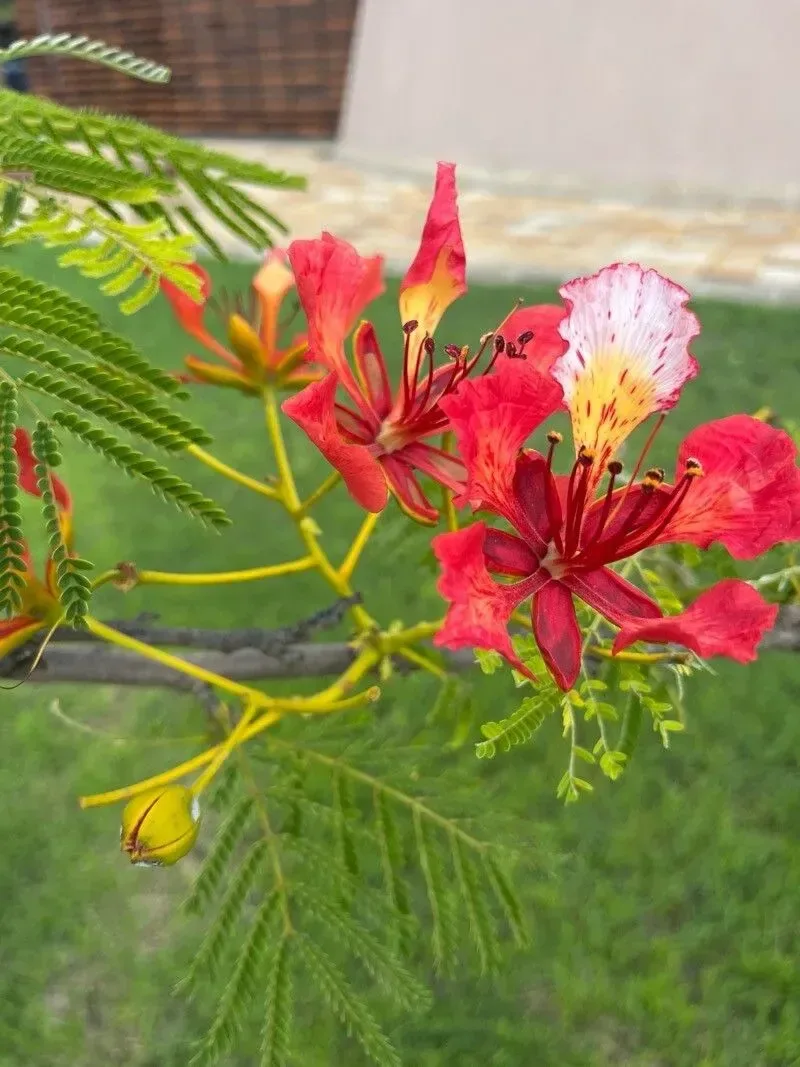
angelicalongo
-
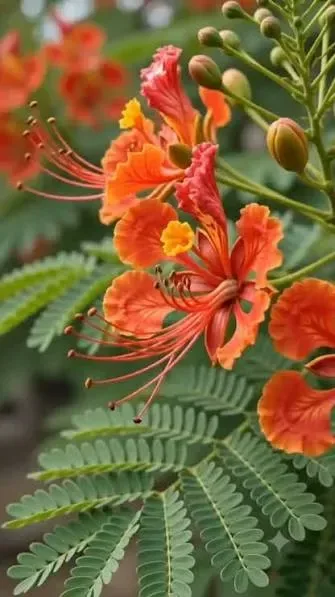
ગુલમોહર
Delonix regia
Flame tree गुलमोहर
Naturalised
Commonly known as Gulmohar, Flamboyant Flame Tree, Royal poinciana, Gul Mohur, Flamboyant tree, Peacock Flower, Red Gulmohar.
Habit
Tree
Origin
Naturalised
Flowering
Summer, Monsoon
Edible
To be verified
Sun
Full sun
Water
Steady moisture · drought tolerant once established
Drainage
Needs to drain well
Soil
Sandy, clay
Soil pH
4.5–7.5
Sow
In the monsoon
Started from
Seed, Cuttings
Germinates
12–349 days
No specific wildlife-relationship data recorded for this species.
- Seed has a hard, woody coat and can lie dormant in the soil for 2-3 years, typically taking 12-349 days to germinate untreated.
- To speed things up, scarify the seed coat carefully (without damaging the embryo inside), or pour near-boiling water over the seed, let it cool, then soak for 12-24 hours in warm water.
- Treated seed sown in unshaded nursery beds germinates in 5-10 days at up to 90% success, and grows on quickly, expect 3-5 months total in the nursery before planting out in the rainy season (don't keep seedlings past 9 months, they get unwieldy).
- Seed stores well if protected from insects (a little ash helps), retaining reasonable viability even after 9 years.
- Branch cuttings also work.
- Where to plant: full sun, in fertile, moist, well-drained soil, sheltered from strong wind.
- When to plant: set container-grown trees out in spring or autumn; sow seed at 18-21°C in spring.
- Spacing: 5-10m apart, keep away from pavements and streets, as buttress roots can lift them.
- Care: water regularly, feed with an all-purpose organic fertiliser in spring.
- It's easy to grow but sensitive to cold, and rarely needs pruning.
A close relative, Delonix elata (Sanghesharo), grows naturally near rivers, streams, and ponds in Saurashtra and Gujarat, making the two easy to confuse in the field.
- Though rarely eaten, mature seeds are a genuinely nutritious potential food source, around 48% carbohydrate, 8.7% protein, and 17.2% fat, though quite high in sodium.
- Seed oil (about 17.2% of the seed) is amber-coloured and rich in linoleic acid.
- A gum from the tree is used in food processing.
- Nearly every part shows real medicinal activity, leaves, flowers, seeds, and bark have documented antibacterial, antidiabetic, antifungal, anti-inflammatory, antimalarial, cardio-protective, and wound-healing effects, and it's used in folk medicine for constipation, rheumatoid arthritis, diabetes, pneumonia, and malaria.
- A leaf extract has shown genuine cardio-protective effects, partly through improving blood flow, and supports liver and kidney function without apparent side effects.
These uses are documented for information only and are not medical advice. Always verify the species and the plant part before use.
Native to Madagascar, now cultivated throughout the tropics worldwide, typically in warm, humid forest from sea level to about 1,000m.