-
Dieter Albrecht
-
Kamal Ajitsaria
-
pascal courteaux
પીપળો
Ficus religiosa
holy fig tree पीपल
Native
Commonly known as peepul, sacred fig tree, અશ્વત્થ.
Entirely dependent on a single fig wasp species for pollination; a population must be large enough for continuous flowering to support that wasp's short life cycle.
- From seed: germinates best around 20°C.
- Can also be propagated by air-layering or tip cuttings 4-12cm long taken from lateral branches.
- Sun: full sun to partial shade, 6+ hours of daily sunlight for best growth; place near a bright window if growing indoors.
- Water: water regularly through spring and summer, keeping soil consistently moist but never waterlogged; reduce watering in autumn and winter.
- It's sensitive to both overwatering and drought, let the top inch of soil dry out between waterings.
- Spacing: allow about 120 inches (3m) between plants.
- Timeline: 3-5 years to reach a significant size; can fruit within 2-3 years under good conditions.
- Planting depth: sow seed on the surface or barely press it in; transplant at the same depth as the root ball.
Deeply sacred across three religions: the Buddha attained enlightenment beneath a Peepal (hence 'Bodhi Tree'), Jainism's fourteenth Tirthankara achieved enlightenment under it too (the 'Chaitya Tree'), and it's closely tied to Krishna, who declares in the Bhagavad Gita, 'Among trees, I am Ashwattha.' In the Skanda Purana it symbolises Vishnu, with Brahma believed to reside in the roots, Vishnu in the trunk, and Shiva in the leaves.
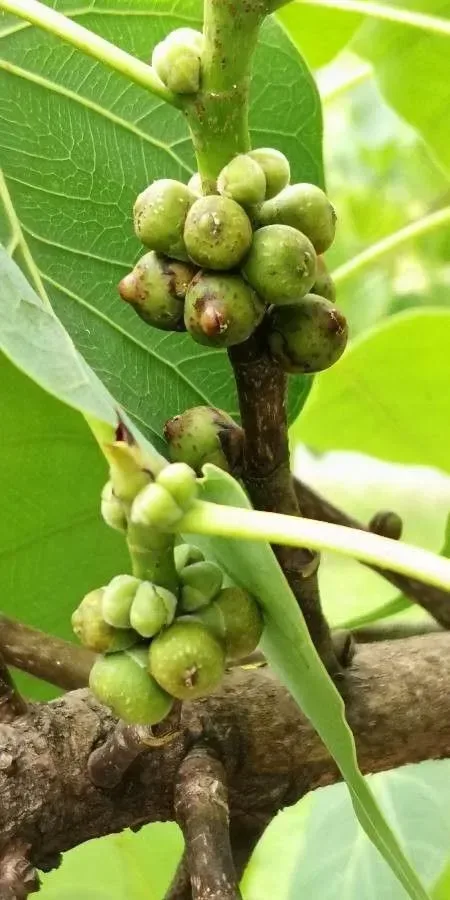
- The small figs and young leaf buds are edible, though not tasty, and are mostly eaten during food scarcity.
- Fresh leaf sap cures diarrhoea, cholera, and wounds; bark infusions treat diabetes; aerial roots are diuretic and chewed by women to promote fertility; and Ayurvedic preparations of the bark and fruit address everything from dysentery to fevers to skin conditions.
These uses are documented for information only and are not medical advice. Always verify the species and the plant part before use.
Native to northern and eastern India, found across the subcontinent up to 1,650m altitude. Widely grown at temples, monasteries, and pilgrimage sites, and cultivated (though rarely naturalised) from South Africa to Hawaii and Florida.