-
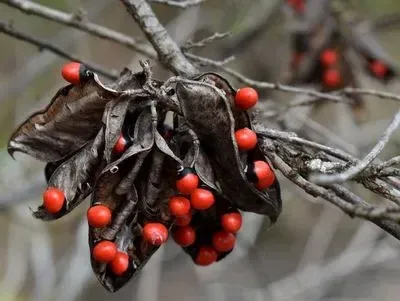
fabaceae 1
-
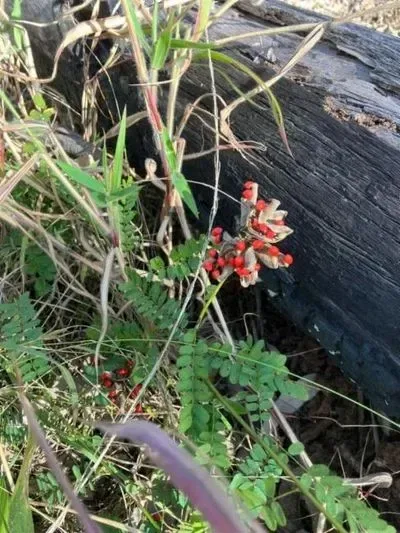
fabaceae
ચણોઠી
Abrus precatorius
Indian Liquorice
Native
Commonly known as Jeguirity, Bead Vine, Black-Eyed Susan, Buddhist Rosary Bead, Crab's eye, Indian liquorice, Rosary pea, Wild liquorice.
No specific wildlife-relationship data recorded for this species.
- From seed: soak for 24 hours in warm water before sowing, or take softwood cuttings.
- Choose a spot with well-draining, slightly acidic to neutral soil, warm climates (21-32°C), and at least 6-8 hours of direct sun daily.
- Test and amend the soil with compost or well-rotted manure, and ensure good drainage, raised beds or mounded soil help if drainage is poor.
- Plant seeds in late spring or early summer once soil has warmed, either directly outdoors or started indoors 4-6 weeks before the last frost.
- Space seeds or seedlings 15-20cm apart in rows 30-45cm apart, at about 1.5cm depth.
- Keep soil consistently moist through germination and early growth, then water deeply once a week once established, more often during dry spells.
- Feed with a balanced organic fertiliser every 4-6 weeks during the growing season.
Ayurveda recognises red, white, and black varieties of Chanoti, each used differently, for eye disease, poison, alopecia, sores, worms, cough, fever, headache, and more. It's also used traditionally for migraines, hair loss, mouth ulcers, and urinary infections.
- Despite the danger, parts of the plant have real traditional and even flavouring value.
- The root contains glycyrrhizin, the same sweetening compound found in true liquorice, 50-60 times sweeter than sugar, though the root also carries toxic compounds that make this use risky rather than recommended.
- Thoroughly cooked seeds have historically been eaten in times of scarcity, since heat above 65°C breaks down much of the toxin, but this is a last-resort food, not a casual one.
- Medicinally, the toxic seeds have been used, carefully, as an abortifacient and emetic and in treating conjunctivitis, while leaves and roots (which carry only trace amounts of the toxin) are used more safely for sore throats, chest conditions, digestive troubles, and skin complaints.
These uses are documented for information only and are not medical advice. Always verify the species and the plant part before use.
Tropical Africa and East Asia, including India, China, and Southeast Asia through to the Philippines, New Guinea, northern Australia, and the western Pacific. Grows in lowland tropical forest, trailing over thickets and hedges, up to 1,000m elevation.