cdbj11
લીલી ચા
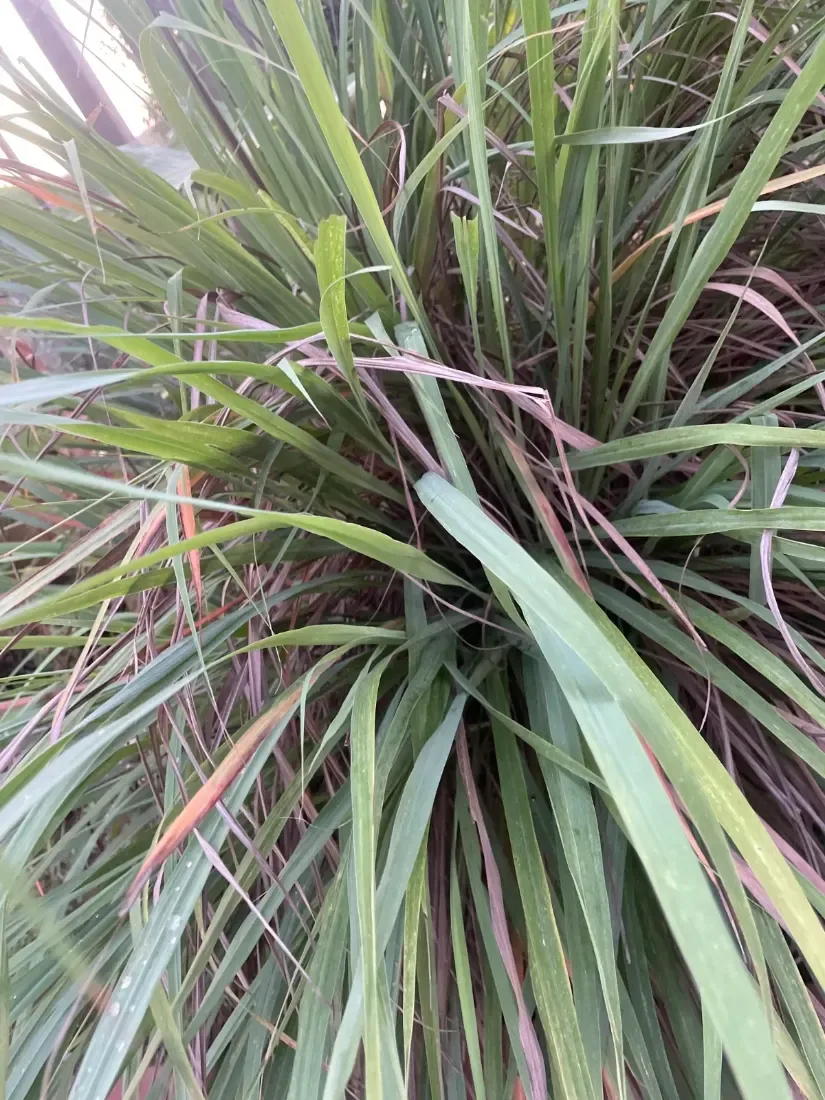
Cymbopogon citratus
Lemongrass
Native Naturalised
Habit
Herb, Grass
Origin
Native, Naturalised
Flowering
Winter, Monsoon, Summer
Edible
Yes
Sun
Part shade · 5 hours
Dense clumps give cover to small insects and soil organisms; flowering, when it occurs, supports insects too.
- A small shrub-like grass that also grows well in a medium to large pot.
- If grown in a pot, repot it once a year to thin it out and create new saplings.
- Most lemongrass dies from overwatering, let the soil dry out between waterings.
- Giving it diluted, old buttermilk once a month improves the flavour of its leaves.
- Used tea leaves, being rich in nitrogen, can be dried and added to the soil periodically to help growth.
- Lightly dig up the soil, remove the top inch, and apply old, composted farmyard manure once a month, except during the summer months.
Widely used as a culinary and aromatic plant across South and Southeast Asia.
- Lemongrass is credited with real health benefits: antioxidant, blood-purifying, and anti-stress properties, and it's considered good for hair and skin.
- It's also said to improve metabolism.
- A 6-inch leaf, cut into small pieces and added to hot tea (kept covered for a few minutes), releases its distinctive flavour and benefits.
- A decoction of lemongrass, tulsi, and ginger with a little honey is a traditional remedy for cough and cold, and lemongrass is also widely used in cooking for both flavour and its health properties.
These uses are documented for information only and are not medical advice. Always verify the species and the plant part before use.
Native to southern India and Sri Lanka; widely cultivated across tropical regions, including India.