-
Sven Pruul
-
plantuse.org
-
Habit
Vegetables
Origin
Native, Naturalised
Flowering
Summer, Monsoon, Winter
Edible
Yes
Sourcing
Available
Sun
Full sun
Water
Steady moisture
Drainage
Needs to drain well
Soil
Rich in organic matter
Sow
In the monsoon
Started from
Seed
Flowers attract bees and other pollinators; pods and seeds, left mature, provide food for wildlife.
- Bhindi grows easily in pots in full sunlight.
- Prepare a sandy, manure-rich soil (2 parts sand, 2 parts manure, 1 part soil) in a pot at least 12 inches deep, and water well.
- Sow seeds 2 feet apart, half an inch below the soil surface.
- Keep soil moist, sprouting happens in about a week.
- Keep soil moist during the growing stage.
- After 3 weeks, water only when the soil is dry.
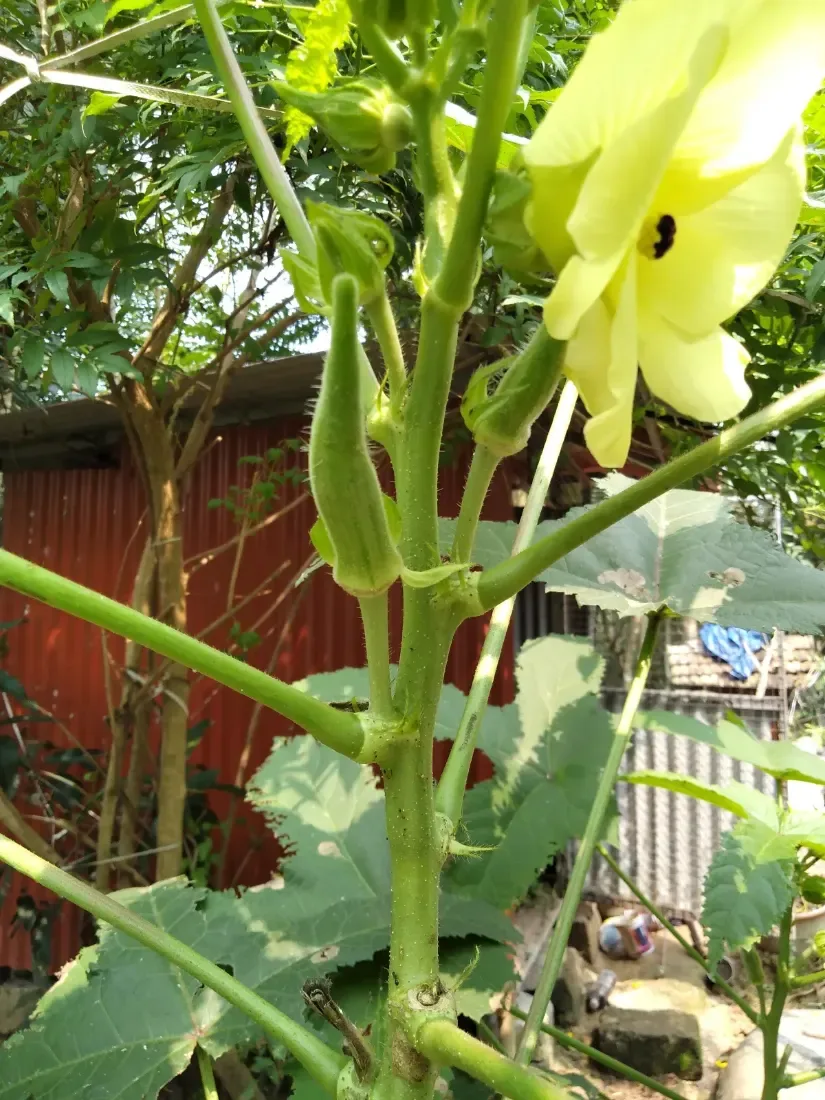
- Bhindi is a sturdy plant and normally doesn't need support.
- Sprinkle 2-3 handfuls of manure on the soil every 4 weeks.
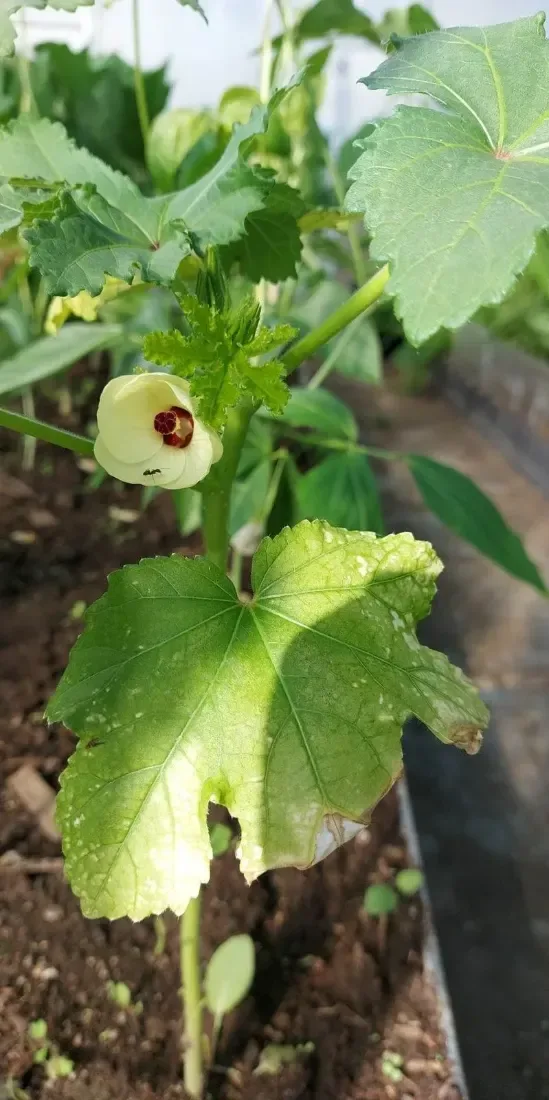
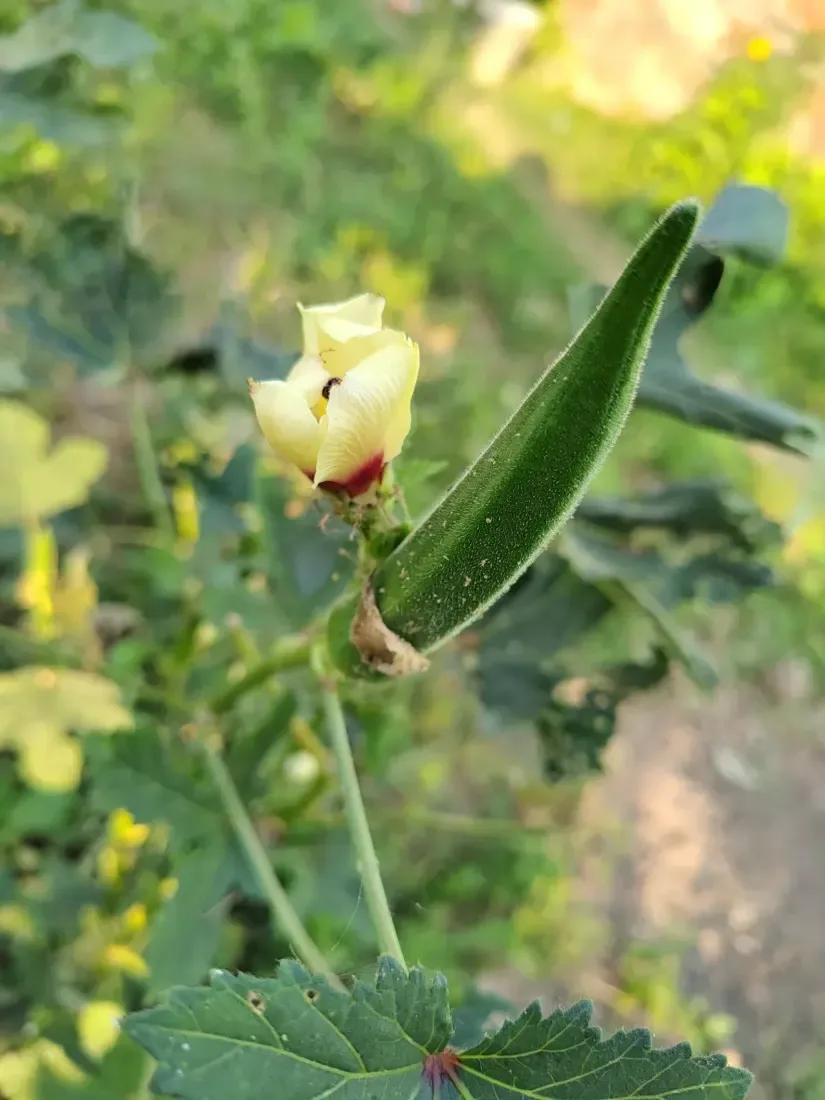
- The plant produces pretty, light-yellow flowers containing both male and female parts, and they self-pollinate.
- Fruit starts forming within about 2 months.
- Harvest the pods while they're still soft.
- You can plant more bhindi once the rains start, and again 45 days later, this way, a home garden can keep supplying bhindi right through to January.
- A family typically needs to grow about 12-15 plants at a time for regular consumption.
A major vegetable in Indian cooking, widely known as bhindi.
- Tender pods are cooked into curries, stir-fries, stews, bhindi dishes, and pickles.
These uses are documented for information only and are not medical advice. Always verify the species and the plant part before use.
Widely cultivated across India, including Gujarat.