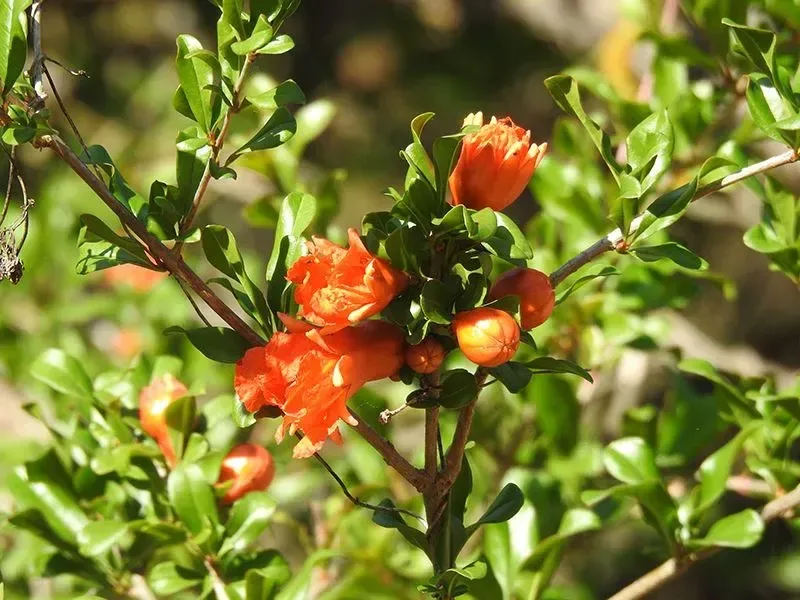
Francisco Picón Diaz
દાડમ
Punica granatum
Pomegranate अनार
Native
Commonly known as Pomogrenate.
Seed or sapling available
Habit
Fruits
Origin
Native
Flowering
Summer, Monsoon, Winter
Edible
Yes
Sourcing
Available
Sun
Full sun
Water
Steady moisture · drought tolerant once established
Drainage
Must not sit wet
Started from
Cuttings
Flowers attract pollinators; fruit and seeds are eaten by birds and mammals.
- Plant a healthy rooted cutting, layered plant, or nursery sapling in full sun.
- Choose well-drained soil and avoid waterlogging.
- Water regularly while it establishes, then less frequently once settled in.
- Light annual pruning after harvest helps maintain an open canopy.
- Fruit develops best with strong sun and a relatively dry period.
An important fruit in Indian cuisines and festive food traditions, and pomegranate imagery also appears widely in South Asian art and textiles.
- Used for fresh arils (seed pods), juice, raita, chutneys, syrups, and dried arils known as anardana.
These uses are documented for information only and are not medical advice. Always verify the species and the plant part before use.
Cultivated widely in India, especially in dry and semi-arid regions including western India.