-
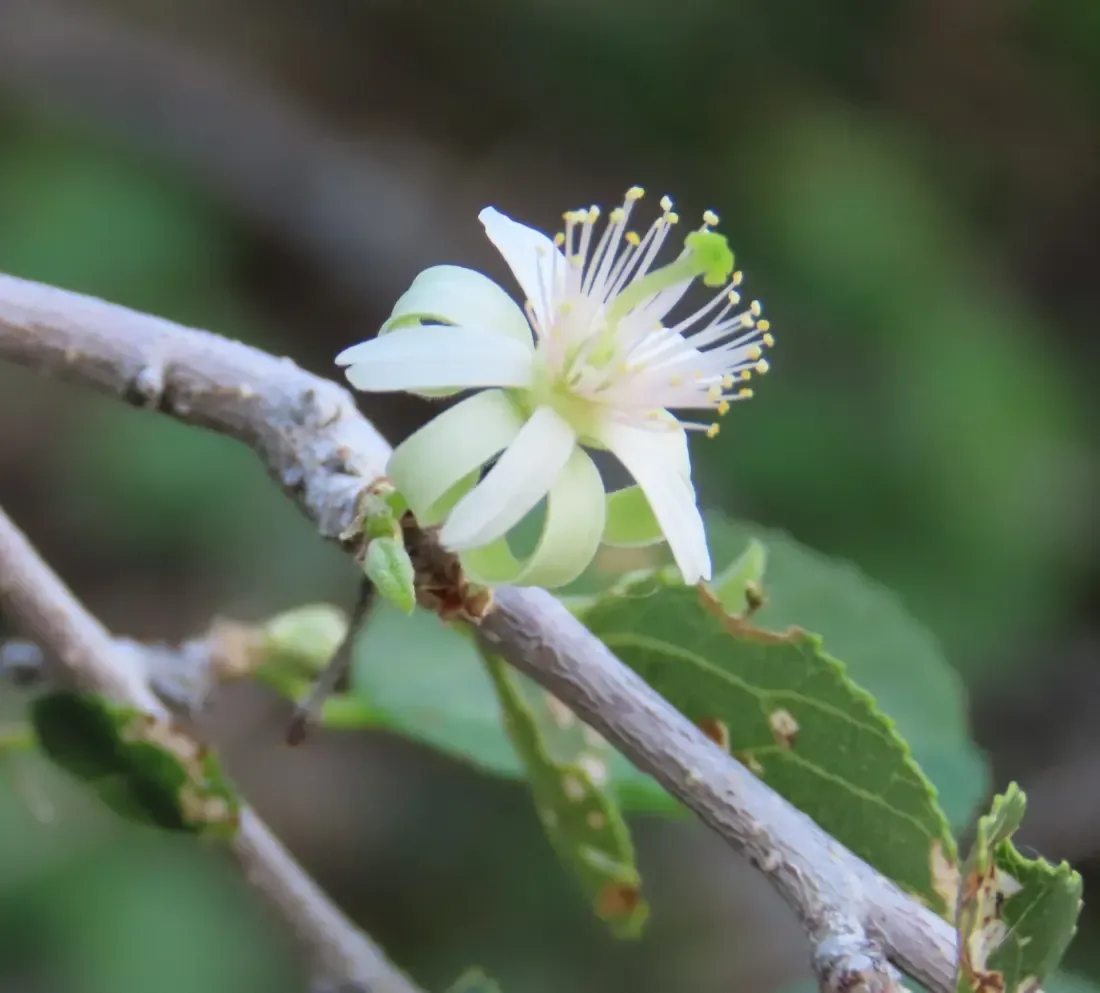
dune_ninja
-
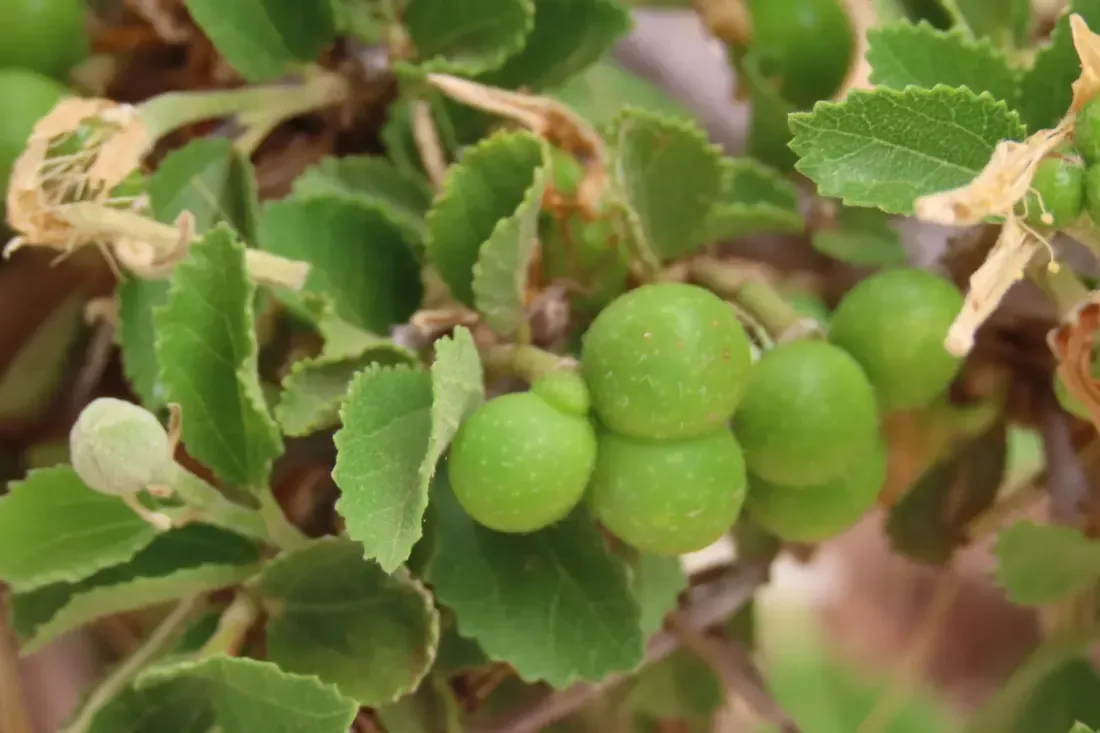
dune_ninja
-
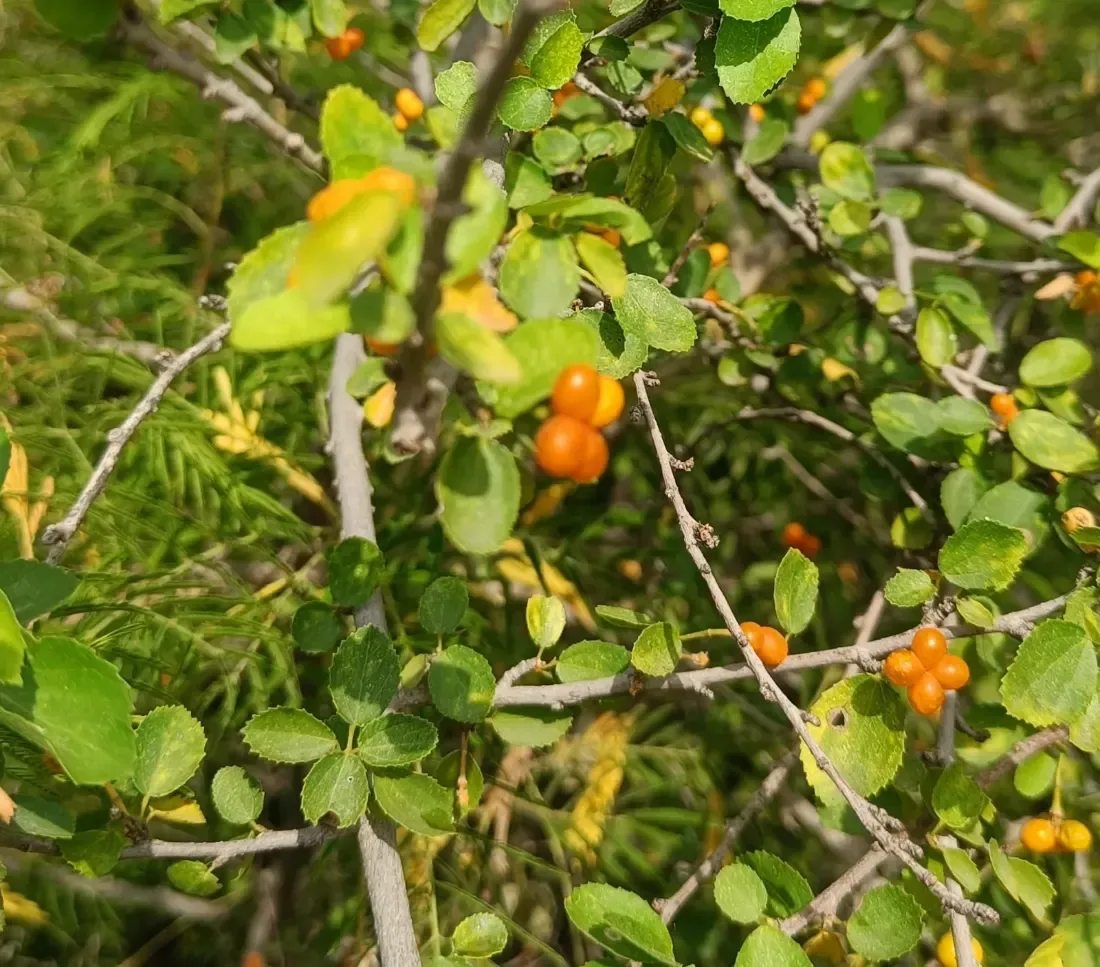
rithika fernandes
ગંગેટી
Grewia tenax
Small-leaf White Raisin
Native
Commonly known as Small-Leaved Crossberry, Gangeti, Gango, Gangi, White Crossberry, Phalsa Cherry, Raisin Bush.
Habit
Shrub
Origin
Native
Flowering
Winter
Edible
Yes
Sun
Full sun to part shade
Water
Steady moisture · drought tolerant once established
Drainage
Needs to drain well
Soil
Sandy, clay, rocky
Started from
Seed
No specific wildlife-relationship data recorded for this species.
- Germination is naturally difficult, but washing and scrubbing the seed thoroughly to remove all fruit flesh has achieved germination rates above 75%, with sprouting within about 10 days.
No cultural-significance data recorded for this species.
- Fruit is eaten fresh or dried, added to 'medida' porridge, and made into a refreshing, iron-rich drink.
- Medicinally, its real strength lies in the soothing mucilage found in its leaves, stems, and roots, taken internally for diarrhoea and dysentery, and applied externally to wounds, cuts, and ulcers.
- Root poultices treat skin diseases, and a bark mucilage with documented bactericidal activity is used against tuberculosis.
- Women traditionally use a bark preparation against hair vermin, and it's a component in a traditional typhoid remedy.
- Research has found CNS-depressant activity in an ethanolic extract of the plant's aerial parts.
These uses are documented for information only and are not medical advice. Always verify the species and the plant part before use.
Drier areas of Africa, through Arabia, Afghanistan, Iran, Pakistan, India, and Sri Lanka, in dry Acacia woodland, sandy and clay depressions, and rocky terrain up to 1,800m.