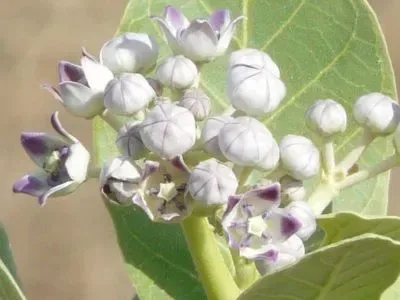
apocynaceae
આકડો
Calotropis procera
Sodom apple आक
Native
No specific wildlife-relationship data recorded for this species.
Ayurveda uses nearly every part for a striking range of conditions, worm infestations, strangury, ulcers, cutaneous disease, bronchitis, dysentery, piles, and more. Modern research has confirmed a genuinely long list of biological activities: anti-diabetic, anti-inflammatory, anti-arthritic, antioxidant, wound-healing, anti-tumour, and hepatoprotective effects, among others.
- Fibre from the stem is twisted into cordage, and the fluffy floss from its seeds is used as stuffing material, much like Giant Milkweed.
- The milky latex is used, carefully, as an abortifacient, and the leaves are insecticidal and used in fomentation.
- Bark treats leprosy, leaves treat asthma, and the whole plant doubles as a green manure that actually improves soil moisture retention and acts as a natural soil binder, a small irony given its reputation as a sign of degraded land.
These uses are documented for information only and are not medical advice. Always verify the species and the plant part before use.
Tropical Africa through Arabia to the Indian subcontinent, Myanmar, Thailand, Vietnam, Malaysia, and Indonesia.