-
-
Jean Claessens
અળવીના પાંદડાં
Colocasia esculenta
Taro
Native
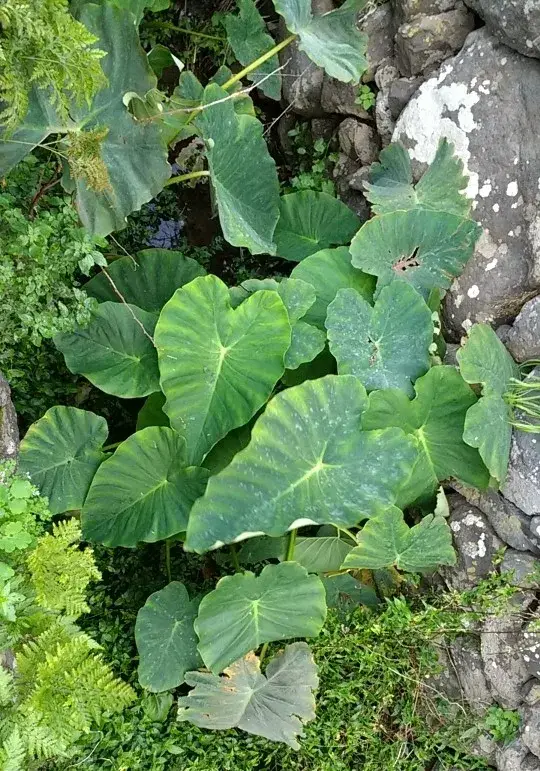
Commonly known as Colocasia Leaves.
Habit
Herb
Origin
Native
Flowering
Monsoon, Winter
Edible
Yes
Sun
Full sun, tolerates shade · 5 hours
Water
Plenty of water
Soil
Rich in organic matter
Started from
Seed
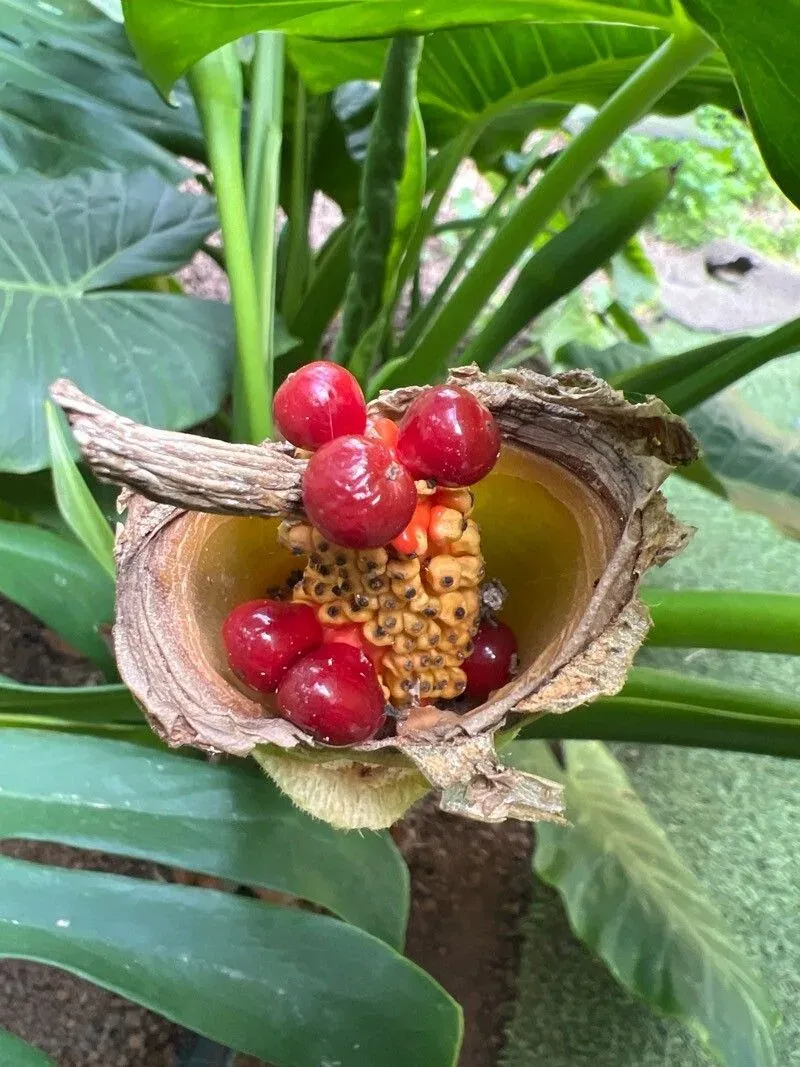
Where produced, flowers can attract insects; the large leaves offer shelter and microhabitat for small invertebrates.
- Potting mix: prepare a manure-rich, sandy, porous soil, water well, and level it.
- Ratio: soil : compost : dry leaves : sand = 30:30:30:10.
- Two types of plants are available.
- To use the leaves specifically, buy the variety with a purple stem and slightly pointed leaves.
- Sowing period: May-June.
- Sowing method: 1-2 rhizomes in a 12 inch (diameter) by 10-12 inch (height) grow bag, with 5 hours of sunlight.
- It can also be grown in a raised garden bed for larger leaves.
- Harvest period: July-March.
- Liquid residue from compost, and amrut jal (a fermented organic liquid fertiliser), are both good for promoting growth.
An important traditional leafy and tuber vegetable across many parts of India, with numerous regional preparations built around its leaves.
- Always cook the leaves with imli (tamarind), this is essential to avoid an itchy throat.
These uses are documented for information only and are not medical advice. Always verify the species and the plant part before use.
Widely cultivated in tropical and subtropical India, including Gujarat.