-
Stef Blaauwgeers
-
plantuse.org
-
plantuse.org
પીલુડી
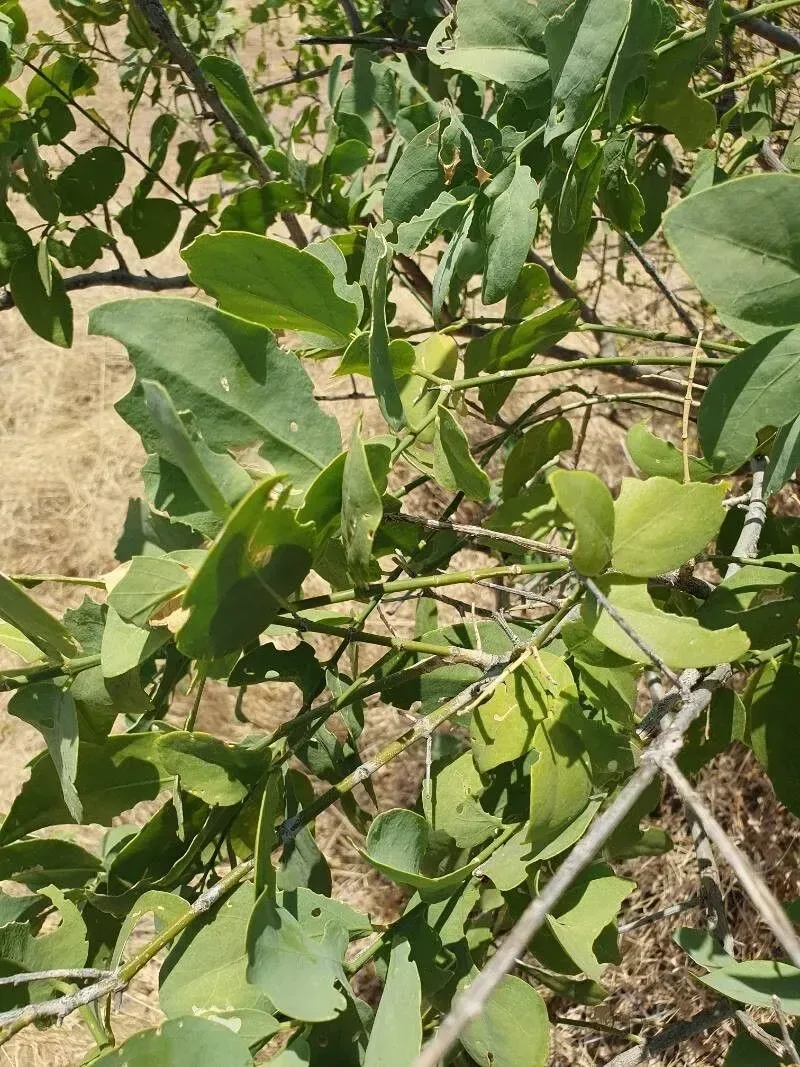
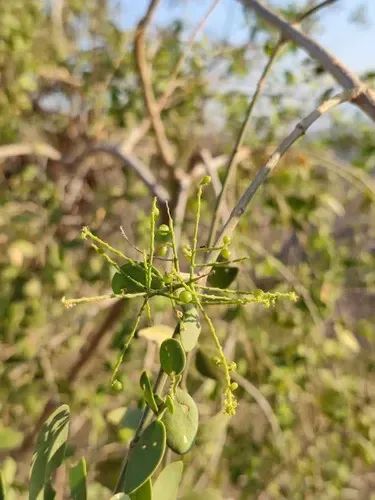
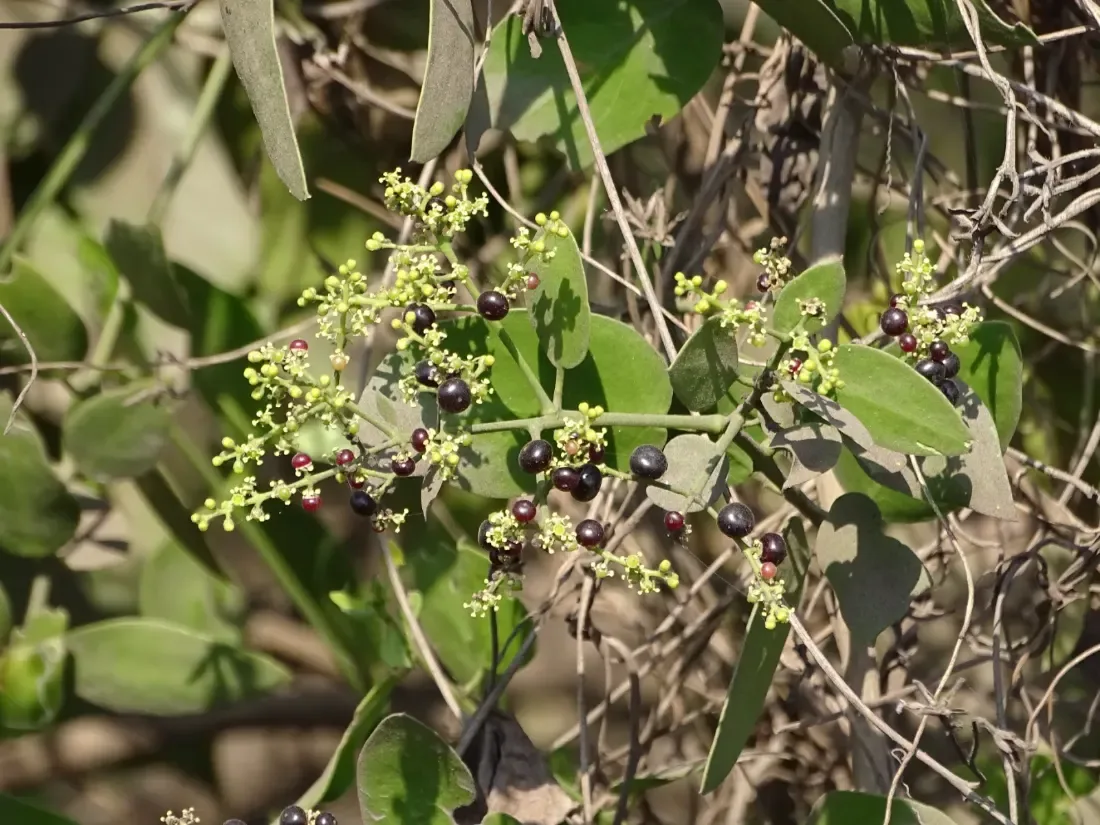
Salvadora persica
Tooth Brush Tree पिलु
Native
Commonly known as Mustard Tree, Salt Brush, Meswak, Piludi, Khari Jar.
No specific wildlife-relationship data recorded for this species.
- Soak seeds for 24 hours in a fruit-pulp solution of the same species, this gives the best germination and shoot growth.
- Sow two seeds per polybag at 1-2cm depth in June under nursery conditions; about 15g of seed covers one hectare at 5x5m spacing.
- Field prep: plough the land in early June and leave fallow for 20-25 days to dry out weeds and aerate the soil, then plough again and level.
- Apply NPK at 30:20:15 kg/ha, with half the nitrogen and all the phosphorus and potassium applied at planting, the rest after 120 days.
- Spacing: 5x5m is ideal.
- Maintenance: hand-weed at 20 days after planting, then every 20 days through the rains, and every 45 days after that until the plant is 3-4 years old.
- Irrigation: a fortnightly schedule improves collar diameter, biomass, and bark/root yield; a monthly schedule suits general growth and height.
- Pest and disease: no serious problems typically observed in this crop.
Classical Ayurvedic texts (Charak, Sushruta, Bhav Prakash, and others) all classify it and prescribe it for purgation, fever, and related uses; considered bitter, sweet, easy to digest, and hot in potency, useful against Kapha and Vata imbalances.
- Young leaves and shoots are eaten raw in salads or cooked, tasting somewhat like mustard.
- Fruit is eaten fresh, dried like currants, or made into a drink.
- Seed fat substitutes for vegetable butter in chocolate-making, plant ash yields a salt, and resin from the plant is chewed as natural gum.
- Its most famous use, though, is as a chewing stick, the classic Miswak, used for oral hygiene across the Middle East and South Asia.
- Beyond that, it treats colds, skin complaints, intestinal parasites, and rheumatism, and the root bark is used to heal sores.
These uses are documented for information only and are not medical advice. Always verify the species and the plant part before use.
Found in arid parts of India, Pakistan, Arabia, and southern Iran, growing in saline and brackish soils, salt marshes, and along coasts. In India: Rajasthan, Haryana, Punjab, Maharashtra, and Gujarat.